


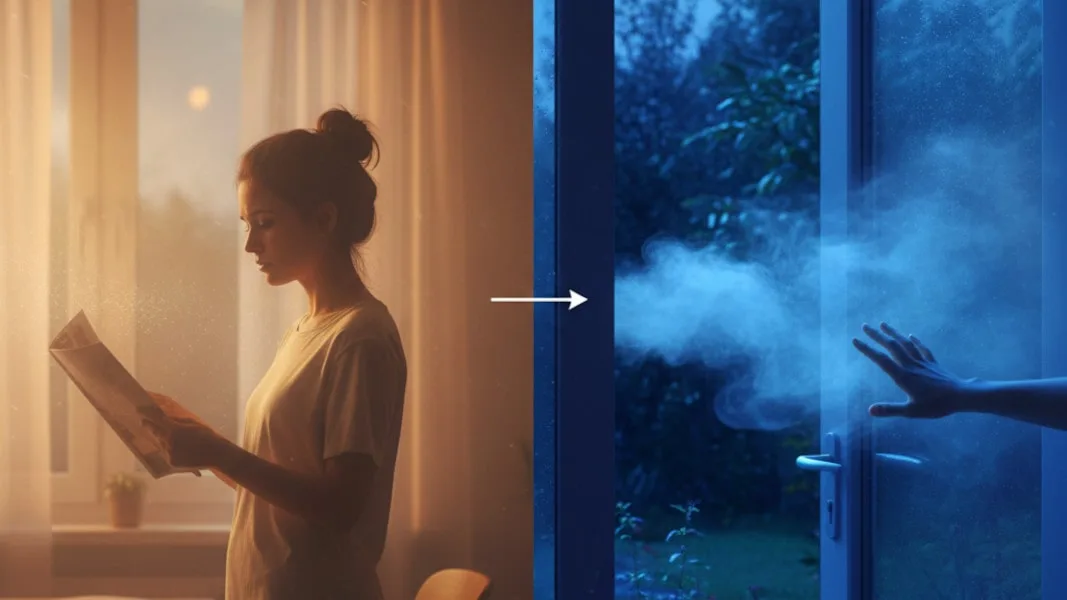
It’s a classic dilemma, especially here in the San Gabriel Valley: you arrive home after a warm day, and your house feels stuffy, but you notice the outside air is now significantly cooler than the air trapped inside. Should you blast the AC? Should you just wait?
Before you reach for the thermostat, here are smart, energy-efficient steps you can take to cool your home naturally—a process known as natural cooling or free cooling.
1. Harness the Power of Ventilation: The Quick Cool Down
Your HVAC system is designed to work in extended cycles to reach and maintain a set temperature efficiently. When you rapidly switch modes, you force the system to go through a complex, power-intensive process repeatedly, which often leads to overshooting your desired temperature.
Strategically Open Windows and Doors
This is the most direct solution, but it requires a plan.
- Establish a Path: Open windows on opposite sides of your house (or at least two different walls) to create a cross-breeze. This allows cool air to be drawn in from one side and warm, stuffy air to be pushed out the other.
- The Chimney Effect (Stack Ventilation): If you have multiple stories, open lower-level windows on the windward side and upper-level windows on the leeward side. Since warm air naturally rises, the temperature difference will create a vacuum effect, drawing the cool air in below and forcing the warm air up and out.
Use Exhaust Fans to Assist
If there’s no natural breeze, turn on your home’s built-in ventilation.
- Kitchen and Bathroom Fans: Run your exhaust fans. They are designed to pull air out of your home, forcing the cooler outside air to be drawn in through your open windows to equalize the pressure.
- Whole-House Fans (If Available): If your home is equipped with a whole-house fan, use it! These powerful fans are located in the ceiling, usually in a central hallway, and pull massive amounts of cool air through the windows and exhaust the hot air into the attic and out the vents.
2. Leverage Your HVAC System Without Cranking the AC
The immediate discomfort of a few extra minutes of heat or cool air is minor compared to the potential long-term damage caused by rapid switching.
Run Only the Fan (Blower)
Before running the compressor (AC), try just running the HVAC Fan on your thermostat. Setting the thermostat fan to “On” (instead of “Auto”) will continuously circulate the air inside your home.
- This costs significantly less than running the AC compressor.
- It helps move the stratified, warmer air near the ceiling down and around, mixing it with the cooler air coming in from your windows, providing immediate relief.
The Thermostat Dead Zone (A Quick Reminder)
As we’ve discussed before, constantly switching between cooling (AC) and heating is hard on your system. If you plan to switch from natural cooling back to the AC or even to the heat:
- Avoid Rapid Toggling: Allow a buffer of comfort before switching modes. Your HVAC compressor needs time to equalize pressure, and short cycling can lead to costly wear and tear. Use the tips above to get comfortable first, and only engage the AC/Heat if you plan to keep it on for several hours.
3. Passive Cooling Techniques
These techniques help prevent the heat from getting trapped inside during the day.
Block the Sun’s Heat
During the day, before you get home, keep drapes and blinds closed on windows facing the sun (east and west). Solar heat gain through glass is one of the biggest contributors to indoor heat build-up. Blocking that radiant heat keeps the interior surfaces cooler, which is what helps the home feel stuffy at night.
Reduce Internal Heat Sources
Avoid using appliances that generate significant heat during the warmest part of the day.
- Cooking: Use the microwave, outdoor grill, or slow cooker instead of the oven or stovetop.
- Lights: Switch to cooler LED bulbs which produce far less heat than traditional incandescent bulbs.
By utilizing the cool outside air and being smart about how you use your HVAC system’s fan, you can enjoy a comfortable home without incurring high electricity costs or stressing your equipment.
Ready to install a whole-house fan to maximize your free cooling? Or does your HVAC system need a tune-up before winter? Contact us today!